The print you get on a custom phone case is never the product of one decision. It is the product of two coupled ones: the material the case is made from and the method used to decorate it. A wraparound photograph that looks flawless on a sublimation-ready hybrid case is not achievable the same way on a soft silicone shell, and a crisp corporate logo that snaps off a UV printer looks different again from one embedded during molding. Understanding how those two choices constrain each other is what separates a case that matches the mockup from one that quietly disappoints at delivery.
This is a deep dive into that relationship: what the common case materials do, how the main decoration methods actually work, and which pairings hold up.
The case materials and how each takes a print
TPU, a flexible thermoplastic, is the default printable material for good reason. It combines flexibility with enough rigidity to hold shape, absorbs impact well, and takes ink with good adhesion, which makes it the go-to surface for detailed full-color work. Polycarbonate sits at the opposite end: rigid, hard, and durable against impact, but with a smoother, less forgiving surface that generally needs extra preparation to hold a print cleanly. Silicone is the softest and most shock-absorbing of the three, pleasant in the hand and resistant to fingerprints, but its very smooth, slightly rubbery surface is the hardest to decorate crisply, so it is usually printed with methods chosen specifically to bond to it.
Hybrid, or “tough,” cases answer the tradeoff by combining materials, typically a soft TPU bumper around the sides for impact absorption with a harder back panel that provides a flatter, more stable printing surface. That construction is why so many bulk custom cases are hybrids: they protect like a rugged case while giving the decoration a good canvas. When someone specifies a “tough case” for a full-color design, this is usually the reason.
How the decoration methods actually work
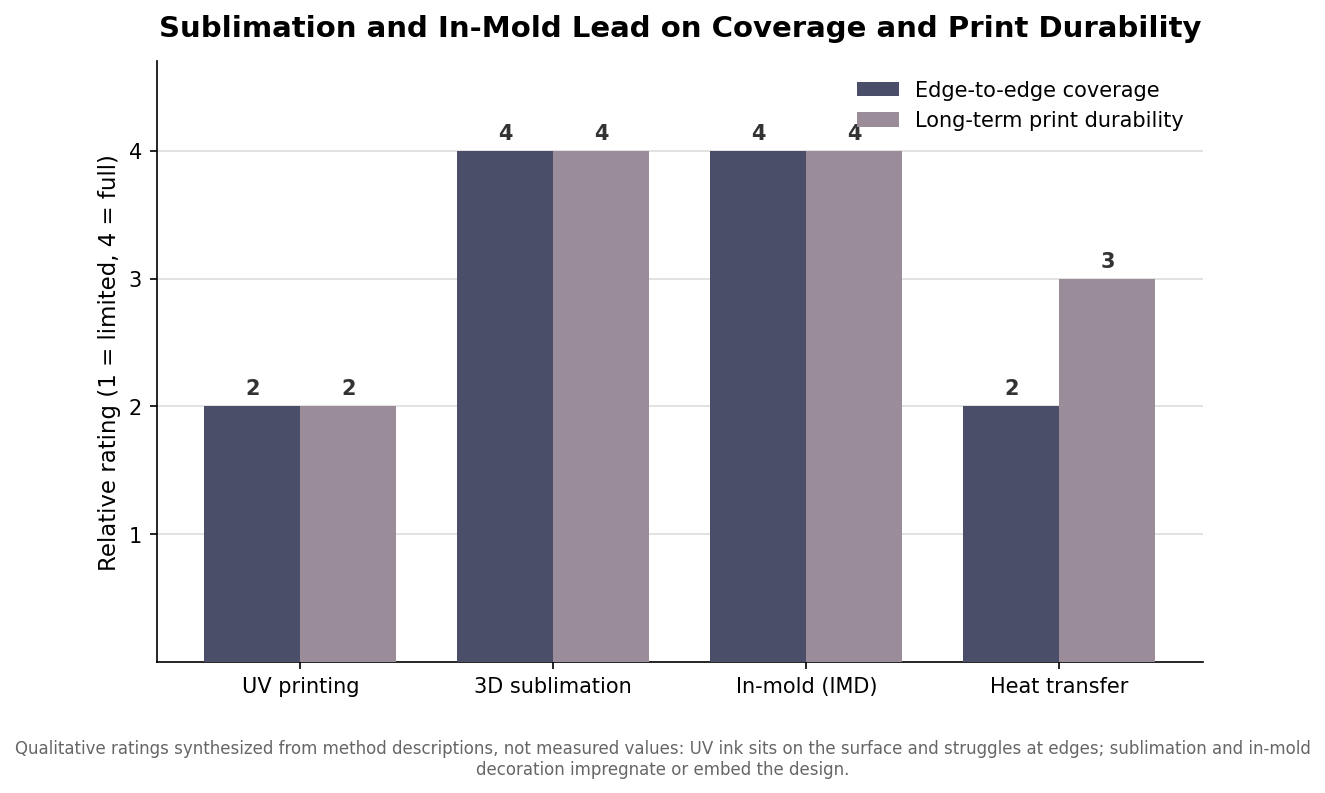
UV digital printing cures ink onto the surface with ultraviolet light. It handles full color, complex art, and even layered effects like a white underbase or spot gloss, and it produces sharp, high-gloss images because the ink sits on top of the case. Its two honest limitations are that it is difficult to print cleanly all the way to a curved edge, and because the ink is a surface layer rather than infused, it can wear or scratch over long, hard use.
Dye sublimation takes the opposite path, using heat to convert dye into gas that impregnates the case surface, so the image becomes part of the material and resists flaking, cracking, and fading. So-called 2D sublimation applies the image to a flat insert, while 3D sublimation wraps the dye around curved and raised areas for near-full coverage, which is how photographic, edge-to-edge designs are achieved. In-mold decoration goes further still, embedding the design during the molding of the case itself; the result is permanent for the life of the case, wraps fully, and can even mimic finishes like carbon fiber, wood grain, or brushed steel. Heat transfer rounds out the common set, applying a pre-printed film that supports photographs and resists peeling and fading, but places the image as a discrete transfer rather than a true edge-to-edge wrap.
The chart below rates these four methods on the two attributes buyers ask about most, coverage and durability. The pattern is consistent: the methods that put the image into or under the surface outperform the one that lays it on top.
Where material and method have to agree
The pairing is where specifications succeed or fail. Sublimation needs a case manufactured to accept it, which is why it is offered on specific hard, gel, and TPU cases rather than on any shell you supply. UV printing is the most materially flexible, bonding to plastic, TPU, and even wood or metal accents, which makes it the practical default when you want full color without committing to sublimation-ready stock. Silicone’s smooth surface pushes you toward UV or heat transfer rather than sublimation, and polycarbonate’s rigidity and finish reward methods that either embed the art during molding or are applied with proper surface prep. In short, decide the look you need first, then let it dictate both the case construction and the method together, because choosing one without the other is how a design ends up compromised.
Clear cases, edges, and the artwork details that trip people up
Clear cases deserve their own attention because they are popular for showing a phone’s color while carrying a logo, and because they behave differently. The transparency that makes them attractive also makes any print sit against a see-through background, so a design meant for clear stock has to be built for it rather than dropped onto it. Two artwork details cause most reprints regardless of material: bleed and cutouts. Designs intended to reach the edge need extra image beyond the trim so a slight shift during production does not leave a white sliver, and the camera, port, and button openings differ by phone model, so a layout that works for one device will clip important elements on another. Confirming the cutout template for the exact model, and keeping logos and text a safe margin inside the edges, prevents the most common and most avoidable disappointments.
Quantities, samples, and lead times
Minimum order quantities on custom cases are lower than many buyers assume, but they vary by case type and by supplier. Some factories set minimums in the hundreds per design, while others will run short batches. At Get Custom Phone Cases the minimum order is 12 cases on every style, which is enough to check the material, the print and the fit on a real handset before committing to a larger run.
Timelines follow a two-step rhythm: a physical sample to approve, then the production run. At Get Custom Phone Cases the free mockup comes back within 24 hours and a standard order ships in about 2 weeks after approval, with express shipping available for tight dates. Because the approval step exists to catch color, fit, and cutout issues before you commit to a full run, the sensible move is to build it into the schedule rather than treat it as optional, and to plan the whole project backward from the date you need cases in hand. Get the material, method, and artwork aligned, approve a real mockup, and the run that follows is the predictable part.